

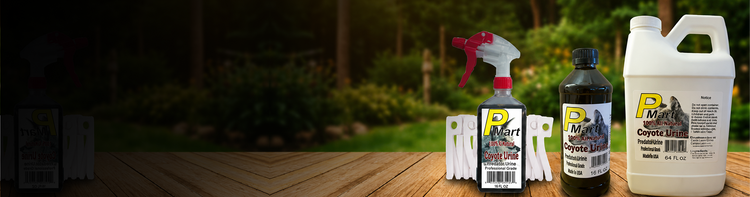
What Smells Deter Deer? The Power of Predator Pheromones
What Smells Deter Deer? The Power of Predator Pheromones
Deer have one of the most finely tuned olfactory systems in the animal kingdom, capable of detecting scent from over a mile away. That same sensitivity is also their greatest vulnerability.
The right smell does not just inconvenience a deer. It triggers a biological threat response that overrides hunger and habit entirely.
So what smells deter deer most effectively, and why do some smells deter deer far better than others? The answer lies in understanding how deer process scent and which signals carry genuine survival weight.
How Deer Process Smell and Why It Matters for Deterrence
Deer use scent as their primary early-warning system. They continuously sample the air for chemical signals from predators, other deer, and environmental cues. What matters is not just whether a smell is unpleasant but whether it registers as a biological threat.
This distinction separates two broad categories of deer deterrent smells:
● Irritant-based smells such as hot pepper, garlic, and soap create a sensory nuisance. Deer may avoid them initially but habituate within weeks once they learn there is no genuine consequence attached to the scent.
● Threat-based smells such as predator pheromones trigger a hardwired survival response that does not erode through habituation because the signal carries real biological meaning.
Understanding which category a deterrent falls into is the most important factor in predicting whether it will hold long-term.
Plant-Based and Household Smells That Deter Deer

What smells deter deer beyond predator urine? There are several plant-based and household smells that repel deer as short-term or supplementary measures:
● Garlic and garlic oil: Sulfurous compounds in garlic are widely used on ornamental and vegetable plants. Effectiveness degrades quickly outdoors and requires frequent reapplication.
● Hot pepper and capsaicin: Irritates deer's nasal passages and mucous membranes. Most effective as a spray applied directly on plant foliage.
● Bar soap: Strongly scented tallow-based soaps emit fatty acid compounds deer find aversive. Hanging soap near vulnerable plants creates a localized deterrent.
● Human hair: Deer associate human odor with danger. Hair placed in mesh bags near garden edges provides short-term deterrence where deer have limited human contact.
● Essential oils: Peppermint, eucalyptus, and clove have repellent effects, best applied as targeted sprays on specific plants.
These work best as supplementary tools during high-risk windows such as transplanting seedlings.
Why Predator Pheromones Outperform Every Other Category
When deer detect the urine of an animal that actively hunts them, the response is not a learned avoidance. It is a neurological alarm.
Deer possess a vomeronasal organ, a secondary scent-processing system specifically tuned to detect biological threat compounds, including those found in carnivore urine. The response bypasses higher-order evaluation and activates the threat response directly.
This answers why, when asking what smells deter deer long-term, predator pheromones consistently outperform every other category.
The signal is not "this smells bad." It is "a predator that kills deer has been here." That message does not lose credibility through repetition the way synthetic or plant-based signals do.
Coyote Urine as the Most Versatile Predator Smell for Deer
Coyotes are among the most widely distributed deer predators across North America, which makes their scent one of the most biologically resonant threat signals available.
Coyote urine is effective against whitetail deer across residential, suburban, and agricultural settings. It triggers avoidance behavior in does and yearlings especially strongly, as these animals tend to carry the highest baseline of threat-vigilance.
When choosing what smells deter deer in a residential or garden setting, coyote urine works best when applied at deer nose height, between 24 and 36 inches off the ground, using dispensers or soaked wicks along garden perimeters, orchard edges, and confirmed deer entry corridors.
Wolf Urine as the Higher-Intensity Threat Signal for Persistent Deer
Where coyote urine covers the majority of whitetail deer situations, wolf urine delivers a categorically stronger threat signal, particularly for mature bucks and experienced does that have habituated to coyote presence in their landscape.
Wolves are primary apex predators of deer, and the wolf-deer predation relationship spans thousands of years of co-evolution.
Wolf urine is the better choice when deer pressure is intense, when you are dealing with large or mature deer that have shown resistance to other deterrents, or when you need to protect a high-value planting during the peak browse seasons of spring and fall.
Building a Layered Smell Strategy That Holds All Season
No single scent category alone produces the most reliable long-term results. The most effective approach layers threat-based predator pheromones with plant-based supplementary smells:
● Apply deer repellent predator urine at nose height along the full perimeter of your protected zone.
● Use capsaicin or garlic spray directly on the foliage of highest-value plants as a contact deterrent.
● Rotate between coyote and wolf urine every five to seven days to prevent olfactory pattern recognition.
● Reapply predator urine on a consistent schedule to maintain a fresh, active threat signal throughout the season.
Conclusion
What smells deter deer most reliably? Threat signals outperform irritants every time. Plant-based and household smells have a role as short-term and contact deterrents, but predator pheromones are the only category that activates a deep, sustained biological avoidance response.
At The Pee Mart, we have supplied genuine coyote and wolf urine to homeowners and property managers for years. Our products carry the real biological potency that makes predator scent work where synthetic alternatives fall short.
Shop our deer deterrent range today and protect your landscape with the smells deer genuinely fear.
FAQs
1. Do smell-based deer deterrents work in all weather conditions?
Plant-based smells degrade fastest in rain and heat. Predator urine pheromones are more resilient but still need reapplication after heavy weather. Shaded application points extend the active life of any scent deterrent.
2. Will predator urine smell bother my neighbors?
It has a detectable odor at close range but dissipates quickly outdoors. Applying in the evening and letting it settle overnight minimizes any noticeable scent to people nearby.
3. How soon will deer start avoiding a freshly treated area?
Most respond within the first one to two nights. Deer that have been feeding in an area for weeks may need several consecutive days of strong scent presence before fully rerouting.


