

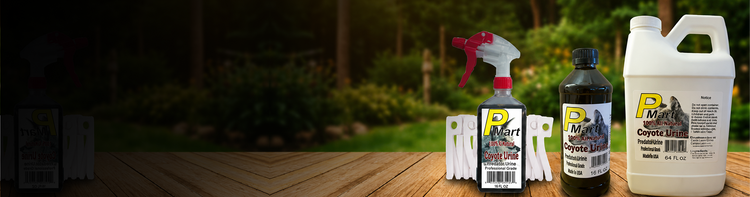
Predator Urine for Rats: Natural Rodent Deterrent
Predator Urine for Rats: Natural Rodent Deterrent
Rats send scouts first. Those scouts map your garage or storage space using body oils and urine trails, and once a path is marked safe, the colony follows.
Predator urine for rats disrupts that navigation system by introducing a biological threat signal at the ground level where rats operate. But it only works under specific conditions, and most guides never explain what those are.
This blog covers the gaps: which predator scent rats are actually wired to fear, why you must clean before you apply, how to use the neophobia window strategically, and how to run an indoor application without making the space smell worse than the problem.
Why Fox Urine Is the Correct Predator Match for Rats
Not all predator scents carry equal weight with rats, and the species match matters. Foxes are dedicated small-mammal hunters whose diet is built around rodents.
Rats carry a hardwired neurological response to fox scent that reflects thousands of years of predator-prey pressure. When a rat detects genuine fox urine, it treats the area as an active hunting ground and avoids it.
Bobcat urine is the stronger choice for moles and voles, which spend most of their time underground, where bobcats actively hunt. For rats in garages, storage spaces, and garden borders, fox urine is the more targeted biological match.
Using the right predator for the right rodent determines whether your application produces results or gets dismissed.
See our rat repellent solutions and find the fox urine format that fits the spaces you need to protect.
Why You Must Remove Rat Smudge Marks Before Applying Predator Urine
Rats navigate using sebum, the oily secretion from their skin, deposited along walls and baseboards as they travel. These secretions build into visible dark smudge marks along established rat highways. Those scent trails are a stronger signal to other rats than any external deterrent you apply over them.
If you apply predator urine for rats directly over an intact rat highway, the fox urine competes with a deeply established signal the colony already trusts. The predator scent registers, but so does the safe-route marker beneath it.
The correct sequence:
● Clean all smudge marks along walls, baseboards, and entry routes using an enzymatic cleaner, which breaks down the organic compounds in sebum rather than just masking them.
● Let the surface dry fully before applying any predator urine.
● Apply fox urine to the now-neutral surface so the predator signal is the only scent message rats are reading in that space.
This is the step most people skip, and it's the most common reason predator urine underperforms in an active rat zone.
The Neophobia Window and How to Use It Before It Closes

Rats are neophobic. New stimuli trigger an avoidance response, and when they first encounter fox urine in a familiar space, they evacuate. That fear response is your most powerful window, and it's finite.
If no predator appears within 48 to 72 hours, the neophobia response fades, and rats begin testing the boundary again.
Use that window deliberately:
● Apply fox urine to all identified entry points, travel corridors, and nesting zones.
● Wait 48 hours while rats vacate the space in response to the threat signal.
● Immediately seal every entry point with hardware cloth, steel wool, or foam sealant before the window closes.
● Follow up with a maintenance application at exterior points to turn away new scouts.
Shop our fox urine and bobcat urine products in formats suited for garage floors, wall bases, and entry perimeters.
Indoor Application Without Turning Your Storage Space into a Smell Problem
Fox urine has a strong musky odor that works well outdoors but creates a genuine problem if applied directly to surfaces in enclosed spaces. The goal indoors is delivering scent at a rat’s nose level without saturating the area:
● Place a fox urine-saturated cotton ball inside a 4 to 6-inch section of PVC pipe and lay it horizontally along the baseboard near entry points. The pipe vents scent at ground level, where rats travel, while limiting open-air dispersion.
● Use scent-loaded granules in a removable shallow tray to keep urine off porous surfaces like cardboard and fabric.
● Never apply liquid fox urine directly onto stored goods or insulation, as these absorb odor and hold it long after the deterrent is no longer needed.
Setting Realistic Expectations Based on Your Situation
Predator urine for rats performs very differently depending on where you are in the problem:
|
Situation |
Effectiveness |
Best Approach |
|
No rats present |
Very high |
Apply at entry points as a preventive barrier |
|
Scout activity detected |
High |
Scent Shock method: seal entry points within 48 hrs |
|
Active colony established |
Moderate |
Clean smudge marks, apply urine, and add pest control |
For prevention and early scouting, fox urine is one of the most effective tools you have. For an established colony that has already nested and bred, it supports a broader approach but won't resolve the infestation on its own.
Use Predator Urine as the Eviction Notice and Seal the Rest
Predator urine for rats is a precision tool, not a broadcast solution. It performs best when competing scent trails are cleared first, applied during the neophobia window, and backed up immediately with physical exclusion.
In that sequence, it gives rats an unambiguous signal that the space has changed and a predator has moved in.
We supply 100% genuine fox urine with no dilution and no synthetic filler, sourced from licensed facilities. Browse all predator urine products and build a rodent deterrent strategy that works with rat biology from the first application.
FAQs - Predator Urine for Rats
1. Do I need to wear gloves when applying fox urine indoors near stored items?
Yes. Gloves prevent transferring your own scent and protect you from contact with surfaces contaminated by rat activity.
2. Can I use predator urine for rats in a car engine bay where rats have been chewing wires?
Use fox urine granules in a shallow tray near the vehicle, not inside the engine bay. Granules near entry points are safer and more effective.
3. How do I tell rat smudge marks apart from mouse smear marks?
Rat smudge marks are wider and darker and sit 2 to 4 inches from the floor. Mouse smear marks are lighter, thinner, and appear lower or along narrow gaps.


