

Predator Urine for Raccoons That Actually Works
Predator Urine for Raccoons That Actually Works
Raccoons remember where food is, problem-solve around obstacles, and test boundaries until something genuinely changes their threat assessment. That's exactly why predator urine for raccoons works when applied correctly and fails when it isn't.
This blog covers the angles most guides miss: which predator scent raccoons are wired to fear, why trash bin application requires a different strategy than garden coverage, what nesting season does to your results, and how to stay ahead of raccoon intelligence over time.
Why Coyote Urine Is the Species-Specific Choice for Raccoons
Not all predator scents carry equal weight with raccoons. In North American suburban environments, raccoons evolved alongside coyotes as their primary predators. That relationship is embedded in raccoon threat-response behavior in a way that larger or geographically distant apex predators simply aren't.
Mountain lion urine is effective against wild pigs and javelina in the Southwest because that predator-prey relationship is regionally active. In a suburban backyard in Ohio or Georgia, a raccoon has no neurological reference point for mountain lion scent.
Coyote urine is the scent raccoons in residential environments are biologically primed to treat as a live threat, which is why it consistently outperforms other options for this specific animal.
See our coyote urine options and choose the format that fits your property and the specific areas you need to protect.
The Habituation Problem and How Scent Rotation Solves It
Raccoons are smart enough to test their environment, and a static scent signal eventually stops working.
If a raccoon detects coyote urine at the same spots over several weeks but never encounters additional evidence of a coyote, its threat response begins to fade. It's learning that the danger signal has no follow-through.
The fix is scent rotation. Rotate between coyote urine and wolf urine every two to three application cycles. The shift in predator scent reactivates the raccoon's threat assessment because it reads as a new territorial signal, not a familiar one it has already discounted.
You can also introduce deliberate two- to three-day gaps at specific spots before reapplying. This mimics unpredictable predator presence more convincingly than a perfectly timed, uniform schedule.
Trash Bin Protection Requires a Different Approach Than Garden Coverage

Applying predator urine for raccoons directly to trash bins is one of the most common mistakes. It creates an unbearable smell for you every time you touch the bin, and it doesn't place the deterrent where it's most effective anyway.
The right approach puts the scent at the raccoon's decision point before it reaches the bin:
● Apply coyote urine granules in a ring 3 to 5 feet from the base of your bins. Raccoons nose-check their surroundings before committing to a food source, and this is where the threat signal needs to register.
● Treat the fence line, gate approach, and ground-level paths around the bin area rather than the bin structure itself.
● Place a scent station (a small vented container holding a cotton ball saturated in coyote urine) near the bin area to protect the active scent from rain and hose runoff.
Shop our scent dispensers to build a weather-resistant scent station setup around high-traffic areas like trash enclosures.
What Nesting Season Does to Your Results
A mother raccoon with a nest of kits in your attic, shed, or under a deck is running on maternal instinct that can override her normal threat-response behavior.
She may not be able to relocate her young immediately, and her drive to protect the nest can push her through scent barriers she would otherwise avoid. In this situation, urine alone is unlikely to move her.
The correct approach:
● Apply predator urine for raccoons as a preventive perimeter in late winter, before female raccoons begin scouting den sites in early spring.
● If nesting has already occurred, contact a wildlife removal professional to handle the active nest first, then use urine as a follow-up deterrent to prevent re-entry.
● Once the nest is cleared, treat all former entry points immediately with coyote urine before a new scout claims the space.
Choosing the Right Format Based on Weather Conditions
Rain doesn't affect all predator urine formats equally. Matching your format to conditions keeps your coverage intact:
|
Format |
Rain Resistance |
Best Use Case |
|
Liquid spray |
Low |
High-impact initial application, dry conditions |
|
Granules |
Medium-high |
Ground coverage, runoff-prone areas |
|
P-Gel |
High |
Fence posts, structural entry points |
|
Scent station |
Highest |
Trash areas, high-rain regions |
Granules absorb into the soil and hold their signal significantly longer than liquid spray in wet conditions.
P-Gel is the strongest choice for vertical surfaces that shed moisture. Use liquid spray for an immediate impact on the first application, then follow up with granules or gel for sustained coverage.
Put a Real Territorial Threat Between Raccoons and Your Property
Predator urine for raccoons works because it engages a threat-response system raccoons can't reason their way out of.
The key is using the right scent for the right animal, placing it where raccoons make their approach decision, rotating it to prevent habituation, and applying it preventively before nesting season closes that window.
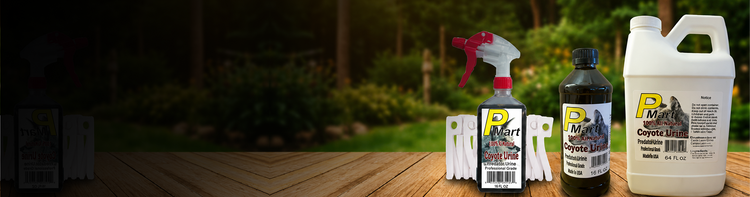
We supply 100% genuine, undiluted coyote urine sourced from licensed facilities with nothing synthetic and nothing diluted. Order genuine coyote urine today and give raccoons a territorial signal they'll take seriously every time.
Predator Urine for Raccoons FAQs
1. Will coyote urine affect my dog's behavior around treated areas?
Dogs will detect the scent and may sniff heavily or attempt to mark over it, but it doesn't cause aggression. Apply coyote urine in perimeter zones away from areas your dog regularly uses, and the behavioral impact stays minimal.
2. How early in the year should I apply predator urine for raccoons to stop them from nesting in my attic or shed?
Late January through February is the right window before female raccoons begin active den-site scouting. Treat attic vents, crawl space openings, and under-deck access points specifically during this period.
3. If I rotate between coyote and wolf urine, will one scent cancel the other out?
No. Different predator scents address different threat signals and don't neutralize each other. Rotating between them keeps the raccoon's threat-response system active by presenting a changing territorial picture over time.


