

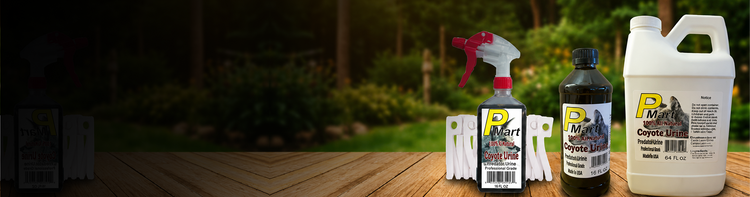
Garden Protection From Animals Made Easy
Garden Protection From Animals Made Easy
Your garden takes time, money, and care to grow. The last thing you want is to find your beds stripped overnight by deer, your bulbs excavated by chipmunks, or your lettuce flattened by rabbits.
Effective garden protection from animals does not have to mean expensive fencing or toxic chemicals. With the right predator scent deterrents and smart application, you can protect every corner of your garden without harming the animals or your plants.
The Animals Most Likely Targeting Your Garden Right Now

Before building your defense strategy, it helps to know which animals you are dealing with. Different species exploit the garden in different ways, and identifying the culprit changes which deterrent you need.
● Deer browse at 24 to 36 inches, targeting shrubs, fruit trees, ornamentals, and tall vegetable plants. Torn or jagged bite marks are a telltale sign.
● Rabbits work at ground level, producing clean-angled cuts on young stems and leafy greens.
● Squirrels and chipmunks dig into soft soil to cache food, uprooting bulbs and seedlings. They are most destructive in spring and fall.
● Groundhogs are heavy feeders that consume vegetables rapidly and burrow beneath garden beds.
● Voles and deer mice damage roots and bulbs from below ground, with activity going undetected until plants begin wilting.
Identifying the active animal is the first step toward choosing the right deterrent.
Why Predator Scent Works Where Other Methods Fall Short
Most gardeners try physical barriers, motion lights, or noise devices first. These share one critical flaw: habituation. Animals quickly learn that a flashing light or spinning pinwheel carries no real consequence.
Predator urine bypasses that learning curve entirely. It communicates, through the biological language wildlife has used for thousands of years, that a predator has claimed the area.
That message does not erode the way a scare tactic does because it is processed by the vomeronasal organ, a chemosensory system wired to recognize genuine biological threat compounds.
Explore our garden and landscape products to find the right format for your setup.
Choosing the Right Predator Scent for Garden Protection From Animals
This is where specificity matters. Matching the right predator urine to the right pest species is what separates a garden protection strategy that holds from one that fails within a week.
|
Animal |
Right Predator Urine |
Why It Works |
|
Deer |
Coyote or wolf urine |
Coyotes and wolves are direct predators of deer |
|
Rabbits |
Foxes actively hunt rabbits at ground level |
|
|
Squirrels and chipmunks |
Fox urine |
Fox-squirrel predation is direct and consistent |
|
Groundhogs |
Coyote or bobcat urine |
Both are documented groundhog predators |
|
Voles and mice |
Bobcats are specialized small-rodent hunters |
We carry genuine, 100% real predator urine across every category above. Shop our rabbit repellent options and start with the right product for your garden.
How to Apply Predator Urine for Effective Garden Protection From Animals
Getting the application right determines whether your deterrent holds. Here are the details most instructions leave out:
Apply at the Correct Height for Each Animal
Ground-level application alone will not stop deer, which carry their noses at 24 to 36 inches. Apply coyote or wolf urine using dispensers or soaked wicks at that height along your perimeter.
For rabbits, chipmunks, and voles, apply fox or bobcat urine at soil level in a continuous band.
Create a Perimeter With No Gaps
Animals probe garden borders methodically, and a single untreated gap becomes the entry point they use every night. Apply product in a consistent line around the full garden, concentrating extra coverage at corners and bed transitions.
Reapply on a Consistent Schedule
Predator urine pheromones break down from UV exposure and heat. Reapply weekly as a baseline and tighten to every five days during peak activity in spring and early fall.
Browse our dispensers and application tools to make reapplication fast and consistent.
Seasonal Garden Protection From Animals: Adjusting Through the Year
Animal pressure on your garden shifts with the seasons, and your deterrent strategy should shift with it.
● Spring is the highest-risk window for rabbits and chipmunks. Establish your fox urine perimeter before you plant.
● Summer brings steady deer pressure on fruit trees and vegetable gardens. Maintain coyote or wolf urine at nose height throughout the growing season.
● Fall sees groundhogs and squirrels entering hyperphagia, dramatically increasing feeding intensity. Reapply more frequently near high-calorie crops.
● Winter deer strip bark from young trees when food is scarce. Apply wolf urine around trunks and ornamental bed borders through the cold months.
Closing Note
Garden protection from animals does not have to be a constant battle. The right predator scent deterrent, applied at the correct height and maintained consistently, gives you a chemical-free, plant-safe solution that works with wildlife biology. We have spent nearly 30 years helping gardeners keep their beds, bulbs, and harvests intact.
Shop our predator urine products today and build a garden protection plan that holds all season long.
FAQs
1. How close to my vegetable plants can I apply predator urine?
Apply it along the perimeter of the soil around your bed, not directly on edible plants or produce. The scent zone extends outward and reaches approaching animals before they reach your garden.
2. Will predator urine wash away after it rains?
Yes, rain accelerates scent degradation. Reapply within one to two days after significant rainfall to restore your perimeter's potency.
3. Can I use more than one type of predator urine in the same garden?
Yes. Fox urine at ground level for rabbits and squirrels alongside coyote urine at nose height for deer covers multiple species without the scents conflicting.
4. Do I need to reapply more in hot weather?
Yes. Heat and UV exposure speed up pheromone breakdown. Reapply every four to five days in warm, sunny conditions to maintain an effective signal.


