

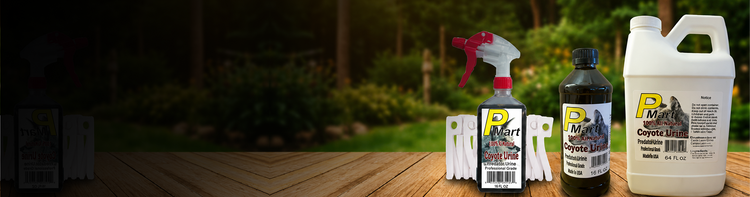
Easy-to-Use Deer Repellent Granules for Long-Lasting Care
Easy-to-Use Deer Repellent Granules for Long-Lasting Care
Liquid predator urine has its place, but it is not always the most practical format for every property or every deer problem.
Deer repellent granules offer a fundamentally different delivery system: slow-release, broadcast-friendly, and designed for the large-area and open-terrain situations where liquid application falls short.
If you have been struggling to maintain consistent coverage across a wide property, granules are the format worth understanding in detail.
Why Granules Outperform Liquid in Specific Situations
Liquid urine delivers a strong immediate scent hit. But in open areas, that scent disperses quickly and degrades unevenly depending on airflow and sun exposure.
Granules work differently. The urine is absorbed into a carrier material that releases scent gradually as it interacts with soil moisture and ambient humidity.
This makes granules the better choice when:
● You are covering a large lawn, field edge, or open yard where a perimeter line is impractical.
● You need coverage that extends across several days without daily reapplication.
● Wind would disperse liquid scent too quickly to maintain a consistent signal.
● You want a low-maintenance format to broadcast and leave in place between scheduled maintenance visits.
The gradual release creates a diffuse scent cloud over a wider surface area, which is exactly what open terrain requires.
Understanding the P-Cover Granule System
The granule products carried by The Pee Mart use a proprietary P-Cover format designed specifically for broadcast application.
Instead of creating a line or point-based perimeter, P-Cover granules are shaken evenly over the target area to create a zone-wide scent presence and not a boundary.
This makes them particularly effective for:
● Lawns with active deer traffic where deer are crossing through rather than approaching from a single direction.
● Large garden spaces where maintaining a tight perimeter line is difficult.
● Open field edges and crop borders where deer approach from multiple angles simultaneously.
The P-Cover system is straightforward: shake the deer repellent granules evenly over the active area, cover the full zone, not only the edges, and reapply on a weekly schedule to maintain the scent signal.
Choosing Between Coyote and Wolf P-Cover Granules for Deer
Both coyote and wolf urine granules deter deer, but matching the right option to your specific situation produces better results than defaulting to either one.
|
Product |
Best Deer Application |
Coverage per Jug |
|
Whitetail deer, residential and suburban lawns |
Approx. 800 sq. ft. |
|
|
Persistent or mature deer, high-pressure situations |
Approx. 200 sq. ft. |
Coyote P-Cover Granules in the 64 oz. size are the workhorse for most residential deer situations, covering approximately 800 square feet per application. That coverage makes it cost-effective for a full lawn or large garden space over multiple weeks.
Wolf P-Cover Granules deliver a higher-intensity predator signal for heavy deer pressure or mature deer that have shown reduced response to coyote-based deterrents.
Broadcast Application Technique That Makes Granules Work
The most common reason granules underperform is uneven or too-sparse distribution. Deer move across a zone, not just along its edge. If coverage is thin in the middle of the treated area, deer will simply travel through the gaps.
Follow this broadcast application approach for consistent coverage:
● Shake the jug in a steady, sweeping motion as you walk across the treatment zone rather than standing in one spot.
● Overlap your passes slightly so there are no uneven gaps between rows.
● Apply extra product at the entry points where deer are actively entering the area, since these are the highest-pressure zones.
● For open field edges, extend the treatment band at least 10 to 15 feet back from the actual boundary so deer encounter the scent zone before reaching the protected area.
Reapplication Schedule and Seasonal Adjustments

Deer repellent granules require consistent reapplication to stay effective. The carrier material holding the scent is subject to breakdown from soil moisture, UV exposure, and temperature fluctuations. A weekly reapplication schedule is the standard baseline for keeping granules active and effective.
Seasonal adjustments matter:
● Spring and fall are peak deer feeding periods. Tighten your reapplication schedule to every five days during these windows.
● Summer feeding pressure eases slightly. A weekly schedule holds well through the season.
● Winter in cold, dry climates sees slower scent degradation. A seven-day schedule remains appropriate, but monitor for any resumption of deer activity as a signal to increase frequency.
Core Takeaway
Deer repellent granules are not a compromise format. They are a precision tool for the specific conditions where liquid application is impractical: large open areas, wide field edges, and properties where broadcast coverage outperforms perimeter lines.
When you match the right granule product to your deer pressure level and apply it with consistent coverage and a reliable reapplication schedule, the results speak for themselves.
At The Pee Mart, we carry genuine coyote and wolf urine granules in formats sized for every property type. With nearly 30 years of experience in predator urine deterrence, we know which products deliver and how to apply them.
Shop our granule range today and give your landscape the consistent, long-lasting coverage it needs.
FAQs
1. Can I use these granules in a raised garden bed?
Yes. Apply them around the outer base of the raised bed frame. The scent zone extends outward and intercepts deer before they reach the bed.
2. How do I know when granules need reapplying?
Fresh deer tracks or browsing damage in a treated area are clear signs the scent has degraded. A consistent weekly schedule prevents that gap from opening before damage occurs.
3. Do granules work differently on a slope or uneven terrain?
On slopes, apply extra product at the uphill boundary since scent disperses downhill with airflow and moisture. Uneven terrain may require tighter application spacing to avoid coverage gaps in low-lying pockets.


