

Coyote Repellent: How to Protect Your Property from Coyotes
Coyote Repellent: How to Protect Your Property from Coyotes
Are you noticing that coyotes have started wandering too close to your home? The first step you need to take is to choose the right coyote repellent so you can protect your property.
No need to worry if you don’t have any idea about coyote repellents. We will help you understand everything about coyotes’ behavior, how scent-based deterrents work, and how you can defend your space effectively.
Why Knowing Coyote Behavior Helps Your Repellent Work Better
Before you set up any barrier or deterrent, it helps to know why coyotes act the way they do. Their behavior isn’t random. In fact, it changes with seasons, food availability, and territory pressure.
Seasonal Shifts
Coyotes become more territorial and patrol wider areas during breeding and pup-rearing seasons. This is when your scent barriers matter the most because coyotes are constantly testing the boundaries of your property.
Food Scarcity Patterns
If nearby natural food becomes scarce, they start exploring yards, compost bins, and even fruit trees. You will notice more nighttime movement in these periods, so you need to change your repellent strategy accordingly.
Night vs. Day Movement
Coyotes are usually most active between dusk and dawn. This means that you should refresh your application zones in the evening, like entry points, garbage areas, and fence lines, so the scent is strongest during their peak hours.
These are the behavioral patterns that you must understand so you can place scent-based deterrents more strategically for consistent results.
How Can You Use Wolf Urine as a Natural Coyote Repellent

Predator scents work because coyotes naturally avoid areas that are dominated by larger predators.
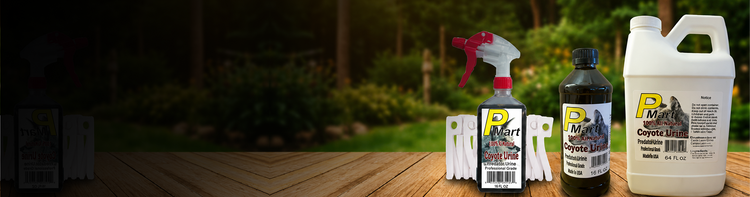
At The Pee Mart, we offer gel-based wolf urine and liquid wolf urine. Both trigger that flight response, but they serve slightly different purposes:
Gel-Based Wolf Urine
● It stays in place longer.
● It is great for vertical applications, like tree bases and fence posts.
● It is perfect to use in dry climates.
● It doesn’t wash away easily.
Here’s what we recommend for usage tips. You must apply gel at about 3 to 4 feet high, which is similar to a natural predator marking height. Reapply every 1 to 2 weeks or after heavy rain.
Liquid Wolf Urine
● It spreads faster and covers larger areas.
● It is best for horizontal ground lines.
● It is excellent for creating wide scent barriers.
We suggest that you use liquid to outline property borders or high-risk zones. You can use it on bird feeders naturally or apply it around trees that drop fruit, which coyotes may hunt to eat.
Both forms of wolf urine play a very important role in giving you long-term territory control. You can rotate between gel and liquid to help prevent scent habituation.
Where Can You Place Wolf Urine Based on Your Property Layout
Many homeowners use repellents but don’t get results because they don’t place them using the right strategy. You want to create a scent wall that interrupts how coyotes naturally explore a space.
These are the main areas you should apply the predator urine scent:
1. Fence Lines and Entry Points
Coyotes test weak or hidden corners first. You must apply wolf urine along:
● Gaps under the fence.
● Detached sections.
● Brush-covered corners.
● Areas with frequent tracks.
2. Garbage and Compost Areas
Your garbage is one of the biggest attractants. If you have a compost bin, you need to secure it or create a DIY coyote-proof lid. A scent deterrent around the perimeter also stops further digging.
3. Livestock and Pet Areas
If you have chickens, rabbits, or outdoor cats, you need to make repellent rings around their spaces. You can combine motion lighting with a scent perimeter for extra protection.
4. Yard Exterior and Interior
Your goal is to keep coyotes off your entire property, not just away from your porch. So begin applying along the outer edge of your yard first, then reinforce the interior areas if you continue to notice activity.
Protect Your Pets With These Coyote-Smart Routines
You don’t just want to keep your property safe. Your pets are your priority, too. Follow these daily habits along with coyote repellent to keep your pets away from harm.
Walk Dogs at Safer Times
Walking your dog late at night or before dawn is the riskiest time. If possible, you must stick to mid-morning or late afternoon walks for a safer stroll.
Use Secure Leashes
Coyotes can try to lure your dog by pretending to run away. Use a 4- to 6-ft leash so you can have much better control than a retractable one.
Install a Coyote Roller
This device sits on top of your fence and prevents coyotes from getting enough grip to climb over.
Train Your Dog to Respond
Teaching your dog basic commands like “leave it” or “back up” can help you prevent dangerous encounters if a coyote shows up.
To Sum It Up
Coyotes follow patterns, test boundaries, and quickly take advantage of your spaces that don’t have enough protection. But with the right coyote repellent, strategic placement, and consistent outdoor routines, you can make your property a place they simply don’t want to explore.
Are you ready to protect your yard with scent barriers that actually work? The Pee Mart is here to help you with the right repellent products.
Browse our variety of wolf urine scents and secure your property today.
FAQs About Coyote Repellent
1. How often should I reapply scent-based repellents?
You can apply every 1 to 2 weeks. But always remember to reapply after heavy rain.
2. Will wolf urine harm my pets or plants?
No. It’s natural and safe for pets, soil, and landscaping.
3. Can I use scent deterrents around bird feeders?
Yes. You can apply gel around poles or tree bases to keep coyotes from hunting fallen seeds or fruit.
4. Why are coyotes still visiting even after using repellent?
You may need a stronger layout strategy, like expanding your perimeter or reinforcing high-traffic zones.
5. Is one type of coyote repellent enough for long-term results?
Using more than one approach gives you a stronger defense. You can combine scent with motion lighting and smart routine changes.


