

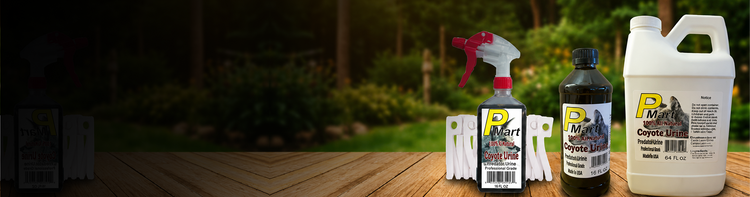
Stop the Smell: Predator Urine for Skunks and Pests
Stop the Smell: Predator Urine for Skunks and Pests
A skunk under your deck is not just an inconvenience. It is an active threat to your evenings, your pets, and your peace of mind. One surprise encounter, and you are spending the next week dealing with the fallout.
The good news is that skunks are highly responsive to the scent of natural predators, which makes predator urine for skunks one of the most practical and chemical-free tools available for keeping them off your property before a spray incident ever happens.
What Most Skunk Deterrent Advice Gets Wrong
Search for skunk deterrents online, and you will mostly find suggestions like cayenne pepper, ammonia-soaked rags, or bright lights. These tactics share a common flaw: they do not communicate anything meaningful to a skunk's threat-detection system.
Skunks are not easily frightened because they know their own defense mechanism makes them dangerous. They are confident animals with a low flight response compared to most wildlife. Bright lights, loud sounds, and chemical irritants are not part of the vocabulary skunks use to assess danger. Predator scent is.
Skunks, like most prey and mid-level prey species, have evolved to recognize the olfactory signature of animals that hunt and kill them. When that scent is present, the risk assessment shifts decisively, and skunks choose to avoid the area rather than push through.
That is the gap that predator urine fills. It does not irritate a skunk. It informs one.
Which Predator Urine for Skunks Works Best?

Coyotes are the most significant natural predator of skunks in North America. Coyotes will actively pursue and kill skunks, and skunks are hardwired to respond to coyote scent as a serious threat. 100% real coyote urine is the most direct and biologically grounded choice when skunks are your primary problem.
For properties dealing with a broader mix of nuisance wildlife alongside skunks, a strategic combination works well:
● Coyote urine targets skunks specifically and also works against whitetail deer and raccoons.
● Fox urine expands coverage to include squirrels, rabbits, and other small critters sharing your property.
● Bobcat urine adds coverage for mice, moles, voles, and other small rodents that often share territory with skunks on the same property.
The key principle with predator urine for skunks is matching the right predator scent to the actual predator-prey relationship. Coyote and skunk have a direct, well-documented predation history, which is why coyote urine sends such a clear signal.
How to Set Up a Scent Perimeter That Actually Holds
The most common application mistake is treating one or two spots and expecting full coverage. Skunks move along the ground in slow, deliberate patterns, and they check multiple entry points over the course of a night.
Your scent perimeter needs to address all of those checkpoints, not just the most obvious one.
|
Application Zone |
Product Form |
Placement Detail |
|
Deck or porch underside access |
Liquid spray |
Spray at and around every open entry point at ground level |
|
Fence line perimeter |
Granules |
Lay a continuous line along the base of the fence, inside and out |
|
Lawn with grub activity |
Granules |
Broadcast across the affected turf area and along the lawn border
|
|
Garden perimeter |
Granules + liquid |
Granules along the bed border, liquid near any existing dig sites |
|
Shed or garage foundation |
Liquid spray |
Focus on corners and any gaps where the structure meets the ground |
|
Brush and wood piles |
Liquid spray |
Apply directly around the base and the entry points |
What Happens After a Skunk Has Already Denned on Your Property
If a skunk has already taken up residence under your deck or shed, the approach shifts slightly. The goal is to make the existing den site feel unsafe so the skunk voluntarily relocates, rather than forcing a confrontation.
Apply coyote urine generously around all access points to the den. Do not block any exit before confirming the skunk has left, or you risk trapping it and triggering a spray response. Apply in the evening before the skunk becomes active, and repeat for several consecutive nights. The buildup of predator scent over multiple nights intensifies the threat signal and is usually enough to convince the skunk to seek a new location.
Once the den has been vacated, seal all access points and maintain a scent perimeter around the structure to prevent re-entry.
To Sum Up
Skunks do not spray for no reason. They spray when they feel cornered or threatened. The best outcome for both you and the skunk is one where they never approach your property at all. Predator urine for skunks accomplishes exactly that. It uses the skunk's own instincts to redirect them away from your home before any confrontation occurs.
At Pmart, we carry genuine coyote urine, fox urine, bobcat urine, and a full range of other predator scent products specifically suited to keeping skunks and other nuisance wildlife off your property the natural way.
Shop our skunk deterrent products today and protect your property before the smell does.
Predator Urine for Skunks FAQs
1. Can I apply coyote urine directly to an area where a skunk has already sprayed?
Predator urine is a deterrent, not a deodorizer. Address the odor first with an enzymatic cleaner, then apply coyote urine around the area to discourage the skunk from returning.
2. How close to my house can I safely apply predator urine?
You can apply it right along the foundation perimeter. Focus on the ground-level zone around any potential den sites or entry points rather than on the structure itself.
3. Will predator urine keep skunks away from my vegetable garden?
Yes, particularly when you establish a consistent granule perimeter around the garden border and reapply on a regular schedule throughout the season.
4. My dog encountered a skunk near our yard. Does that mean there is a den nearby?
Not necessarily. Skunks travel considerable distances in a single night. However, it is worth inspecting beneath your deck, porch, and shed for signs of denning activity and applying predator urine as a precaution.
5. Is predator urine for skunks safe to use if I have outdoor cats or small dogs?
Yes. Predator urine is a natural biological substance with no toxic chemicals. That said, pets may be curious about the scent, so apply it in areas your pets do not directly access when possible.


