

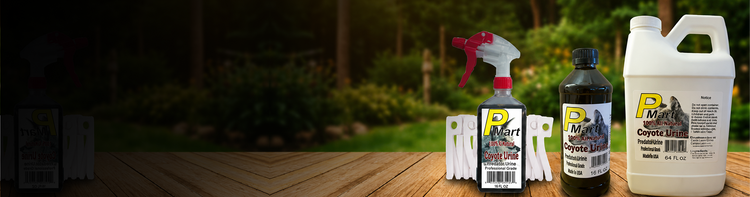
Keep Rabbits Out with Predator Urine
Keep Rabbits Out with Predator Urine
You have invested time, care, and patience into your garden only to find tender shoots clipped and beds grazed down overnight. If you are looking for a solution that actually aligns with rabbit behavior, predator urine for rabbits offers a powerful and natural way to protect what you have grown.
We believe the most effective deterrents don’t rely on force or frustration, but on communication. And in the wild, scent is the loudest language there is.
Why Scent Triggers Rabbits More Than Barriers
Rabbits are excellent at bypassing physical obstacles. They burrow under fences, slip through gaps, and learn routines quickly. What they can’t ignore is the chemical signature of danger. As prey animals, rabbits continuously assess risk through scent, deciding where it’s safe to forage and where it’s not worth the risk.
When you introduce predator scent into that equation, you change the math entirely. Your garden stops smelling like food and starts smelling like a fatal mistake.
Predator Urine for Rabbits and the Nature of Instinctive Fear

Rabbits evolved alongside predators like foxes for thousands of years. Their survival depends on recognizing predator hormones and pheromones found in urine. These markers don’t just say a predator was here, but they signal how recently it passed through and whether it’s actively hunting.
Using predator scent for rabbits creates what wildlife biologists call a “landscape of fear.” Instead of reacting after damage occurs, you reshape how rabbits perceive your property. The result is avoidance, not confrontation.
Turn Your Garden Perimeter Into a No-Go Zone
One common mistake is that you treat individual plants instead of the routes rabbits actually use. Rabbits don’t wander randomly. They follow edges, hedges, and protected pathways.
To build an effective scent barrier, you must:
● Apply urine along fence lines, shrub bases, and garden borders.
● Focus on shaded entry points and areas with cover.
● Reinforce corners and gaps where rabbits feel concealed.
Using fox urine along these edges is especially effective because foxes are a primary rabbit predator in both rural and suburban environments. When the scent creates territory, rabbits choose a different feeding ground altogether.
How Scent Freshness Maintains a True Predator Threat
Rabbits constantly evaluate risk. A faint and degraded scent may spark hesitation but not retreat. Potency is important.
We recommend that you refresh scent placements every 7 to 10 days, or immediately after heavy rain. The goal is to maintain the illusion of an actively patrolling predator.
At The Pee Mart, our high-quality products preserve the chemical compounds that trigger fear responses, ensuring the message stays clear and convincing.
This consistency is what makes predator urine for rabbits a strategy rather than a one-time fix.
Application Methods That Match Your Property’s Landscape
Different spaces require different delivery methods. Here’s how to choose what works best for your yard:
|
Application Method |
Best Use Case |
Advantage |
|
Liquid urine |
Perimeter barriers and scent tags |
Immediate and strong scent |
|
Granules or pellets |
Large beds and ground cover |
Slower release and rain-resistant |
|
Hanging scent tags |
Shrubs and raised beds |
Keeps scent at rabbit nose-level |
Effectiveness comes from strategic placement, not from using larger amounts.
Why Fox Scent Creates a Psychological Wall
Among predator scents, fox urine works the best for rabbits. Foxes hunt silently, enter burrows, and mark territory aggressively. When rabbits detect fox scent, they don’t just fear attack. They assume that they have crossed into occupied territory.
Incorporating fox urine into your routine reinforces that psychological barrier day and night, even when you are not actively monitoring your garden.
Use Wind Direction to Your Advantage
Scent doesn’t spread evenly. Wind, walls, and dense vegetation all affect how deterrents travel. Many gardeners overlook “scent shadows.” These are the areas that are blocked from airflow where rabbits can approach undetected.
You should observe prevailing wind patterns and place deterrents upwind of the areas you want to protect. This way, rabbits encounter the warning scent before they see your plants. You are letting nature deliver the message for you.
Do Rabbits Get Used to Predator Urine?
This is one of the most common concerns we hear. While animals can habituate to visual scare tactics, scent-based fear is different. Predator recognition is instinctual.
To keep deterrents effective long-term, you must:
● Shift scent placement from time to time.
● Refresh regularly.
● Reinforce after weather changes.
You prevent rabbits from testing boundaries by keeping the “territory” dynamic. Predator urine for rabbits works best as an ongoing management approach that mirrors the unpredictability of the wild.
Conclusion
Rabbits may be persistent, but they are guided by survival above all else. When you tap into instinct instead of irritation, you gain control without harming wildlife or your environment. Predator urine for rabbits gives you a way to protect your garden naturally, quietly, and effectively.
We have seen how a well-placed scent barrier can turn a problem area into a rabbit-free zone. If you are ready to stop replacing plants and start enjoying your space again, explore our authentic predator scent solutions and build your invisible fence today!
Predator Urine for Rabbits FAQs
1. Is predator urine safe for pets and people?
Yes. When you use it as directed, it’s non-toxic and safe around homes, gardens, and pets.
2. How quickly will rabbits stop coming back?
Many homeowners notice reduced activity within days, especially when barriers are applied correctly.
3. Can I use predator urine year-round?
Yes. Rabbits forage year-round, and scent deterrents remain effective in all seasons with proper reapplication.
4. Will rain wash away the scent completely?
Not completely, but it can dilute it, which is why we recommend reapplication after heavy rain.
5. Do I need to treat the entire garden?
No. Strategic perimeter placement is more effective than treating every plant.


