

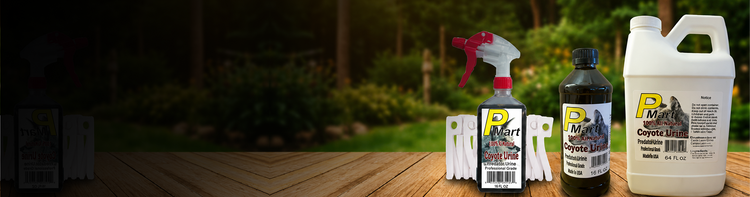
How to Keep Cats Away from Your Garden and Furniture
How to Keep Cats Away from Your Garden and Furniture
If you are dealing with repeated visits from neighborhood or stray cats, you already know how frustrating it can be. From dug-up garden beds to scratched outdoor cushions, the damage adds up quickly.
The real solution starts with understanding how to keep cats away by working with their instincts, not against them.
The Pee Mart approaches this problem through behavior and scent-based deterrence. Cats are not just wandering randomly. They are mapping territory, marking zones, and returning to places that feel safe. Once you shift that perception, you stop the behavior at its source.
How Cats Map Your Property as Safe Territory
Cats are creatures of habit. When they visit your yard or furniture repeatedly, it means they have already marked it as part of their routine.
What makes your space attractive to cats:
● Soft soil for digging and waste.
● Quiet, undisturbed hiding spots.
● Textured surfaces for scratching.
● Food sources like birds or rodents.
Once a cat claims an area, it leaves behind scent markers that guide it back. This is why surface-level solutions usually fail. To really understand how you can keep cats off your property, you need to disrupt that territorial mapping.
How to Keep Cats Away by Creating a Predator Scent Boundary
The most effective way to shift a cat’s behavior is through scent. Cats may be predators, but they are also prey in the wild. Their survival depends on avoiding larger threats.
Building a scent-based perimeter:
● Apply predator urine along fences and entry points.
● Focus on garden edges and furniture zones.
● Reapply every 2 to 3 weeks.
● Strengthen coverage after rainfall.
When you introduce a scent like coyote urine, the cat’s brain interprets your space as occupied by a dominant predator. This triggers an avoidance response rather than curiosity.
For larger areas, using wolf urine adds another layer of intensity, reinforcing the idea that your property is not safe territory.
Breaking Pheromone Cycles on Outdoor Furniture
A common overlooked problem is scent marking on furniture. When a cat scratches or rubs against surfaces, it leaves behind pheromones from its paws.
Why this matters:
● The scent acts as a “return signal.”
● Other cats may also be attracted.
● Cleaning alone does not remove the marker fully.
How to disrupt this cycle:
● Use enzymatic cleaners to break down scent residue.
● Place scent deterrents near furniture legs.
● Avoid leaving cushions exposed overnight.
You are not just cleaning the surface. You are removing the cat’s claim to that object.
Changing the Ground Texture to Stop Digging Behavior

Cats are extremely sensitive to texture. This is a powerful but commonly ignored control method.
Effective ground modifications:
● Add coarse mulch or gravel to garden beds.
● Use prickly or uneven surfaces.
● Install discreet ground deterrent mats.
When paired with predator scents, this creates a dual deterrent:
● Physical discomfort.
● Psychological fear.
This combination is far more effective than using either method alone when figuring out how to keep cats away long-term.
Disrupting Hidden Pathways and Entry Routes
Cats don't stray at random. They follow consistent paths into your property.
Common entry points:
● Fence lines.
● Gaps under gates.
● Bushes and hedges.
● Walls or ledges.
What you should do:
● Apply scent deterrents directly at these entry zones.
● Trim dense vegetation used for cover.
● Place deterrents at “pause points” where cats stop and observe.
Using a competitive predator scent like fox urine in these areas can simulate territorial overlap, making cats feel like they are entering contested ground.
Protecting High-Value Zones Like Bird Areas and Ponds
If you have birds, feeders, or a pond, your yard becomes a hunting ground for cats. These areas require extra attention.
Targeted protection strategies:
● Apply scent at stalking zones like bushes and fences.
● Elevate deterrents to cat nose level.
● Remove easy hiding spots.
● Keep feeding areas clean and controlled.
Cats depend on stealth. When their hiding spots feel unsafe, they abandon the hunt entirely.
Pairing Problem Areas With the Right Solution
Different areas require different approaches. A targeted strategy works better than a general one.
|
Problem Area |
Cat Behavior |
Best Solution |
|
Garden beds |
Digging and waste |
Texture change + scent barrier |
|
Outdoor furniture |
Scratching and marking |
Clean + scent deterrents nearby |
|
Entry points |
Routine access |
Strong perimeter scent application |
|
Bird zones |
Hunting behavior |
Elevated scent + cover removal |
When you match the solution to the behavior, your results improve quickly.
Creating a Long-Term Territorial Shift Instead of a Temporary Fix
Most solutions fail because they are inconsistent. Cats test boundaries. If a deterrent disappears, they return.
What works long-term:
● Consistent scent reapplication.
● Rotating scent placement occasionally.
● Maintaining clean, clutter-free spaces.
● Reinforcing problem areas regularly.
The goal is not just to stop one visit. It is to convince the cat that your property is permanently unsafe.
This is the core principle behind learning how to keep cats away effectively.
End Note
Cats are intelligent, observant, and highly responsive to their environment. When you understand how to keep cats away, you stop reacting and start controlling the situation.
By using predator scent deterrents, removing pheromone markers, and adjusting your environment, you create a space that cats instinctively avoid.
At The Pee Mart, we believe in natural, behavior-based solutions that work with the animal’s instincts. You do not need harsh chemicals or constant intervention. You need the right signals in the right places.
If you are ready to protect your garden and furniture for good, start building your scent barrier today. Be in charge of your space with proven, natural solutions that keep cats from coming back.
FAQs
1. Will predator urine affect my own pet cat or dog?
Your pets may notice the scent, but they usually feel secure in their home environment and do not react strongly.
2. How long does the scent last outdoors?
Typically, 3 to 4 weeks. Reapply after heavy rain for best results.
3. Is it safe to use around furniture?
Yes, but apply it near furniture rather than directly on surfaces.
4. Why do cats keep returning to the same spot?
They follow their own scent markers. Without removing those, they will return.
5. Can I use this in vegetable gardens?
Yes. Apply around the perimeter, not directly on plants.


