

How to Get Rid of Foxes and Protect Your Livestock
How to Get Rid of Foxes and Protect Your Livestock
Protecting your animals from predators is not just about reacting to a problem. It is about staying ahead of it. If you are searching for how to get rid of foxes, chances are you have already seen signs of trouble around your livestock.
Foxes are not random hunters. They are strategic, persistent, and highly responsive to scent, which means your approach needs to work on their instincts, not just your fences.
We focus on helping you build a system that protects your livestock consistently. This is not about temporary fixes. It is about creating an environment where foxes do not feel safe enough to enter.
Why Foxes Target Specific Livestock
Foxes don’t go after large, healthy animals. Instead, they focus on livestock that is easy to access and low risk.
Livestock most at risk:
● Chickens, ducks, and turkeys.
● Newborn lambs and kids.
● Injured or isolated animals.
● Animals housed in poorly secured pens.
Foxes are opportunistic. If your property offers easy access and minimal resistance, it becomes part of their hunting route. Once that pattern is established, they will return again and again.
This is why your strategy for how to get rid of foxes must focus on removing that sense of safety.
How to Get Rid of Foxes Using a Livestock-Focused Scent Perimeter

The most effective way to protect your animals is to control how a fox perceives your land.
Foxes rely heavily on scent to assess danger. When they detect the presence of a larger predator, their instinct tells them to avoid the area entirely.
Building a scent barrier around livestock areas:
● Apply predator urine every 10 to 12 feet along fencing.
● Focus on entry points, gates, and weak zones.
● Reinforce areas around coops, barns, and birthing pens.
● Refresh after rain or every 2 to 3 weeks.
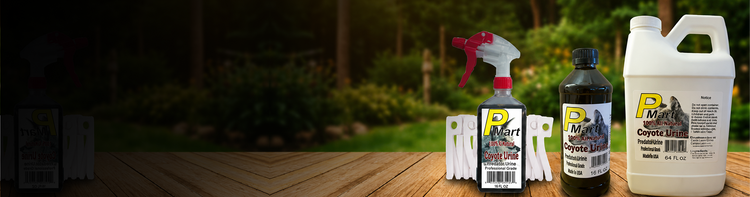
Using a strong predator scent like wolf urine creates a territorial signal that a fox cannot ignore. It does not just deter. It communicates risk at a biological level.
For high-risk zones, especially where young livestock are kept, layering scent with mountain lion urine increases that perceived threat even further.
Protecting Poultry from Nighttime Fox Attacks
Poultry is one of the most common targets because it is easy to access and usually not well-secured.
Practical poultry protection strategies:
● Install hardware cloth instead of chicken wire.
● Use an apron barrier to stop digging.
● Secure all coop doors with locking latches.
● Apply predator scent around the coop perimeter.
● Remove leftover feed that attracts rodents.
Foxes mostly hunt at night, but they are not limited to it. During breeding season, they may hunt during the day as well.
Your poultry setup should always assume a fox is nearby and evaluating your defenses.
Safeguarding Lambs and Goat Babies During Vulnerable Seasons
Lambing and kidding seasons create a temporary spike in vulnerability. This is when foxes are most likely to test your property.
Focus on the “nursery zone”:
● Keep newborns in enclosed, secure areas.
● Apply predator scent more frequently around pens.
● Remove the afterbirth immediately.
● Avoid spreading young animals across large areas.
Foxes are drawn to scent cues like blood and afterbirth. If these are left in open areas, they act as direct signals leading predators to your livestock.
If you are serious about how to get rid of foxes during this time, your preparation matters more than ever.
Strengthening Livestock Enclosures Beyond Basic Fencing
Standard fencing alone is not enough. Foxes can dig, climb, and squeeze through surprisingly small gaps.
Reinforcements that make a difference:
● Install an L-shaped fence apron underground.
● Use fences at least 6 feet high.
● Add outward-angled tops to prevent climbing.
● Seal all gaps larger than 2 inches.
Physical barriers slow foxes down. Scent deterrents stop them before they even try.
When you combine both, your livestock area becomes extremely difficult to penetrate.
Daily Livestock Management That Reduces Fox Activity
Your daily habits play a major role in whether foxes are attracted to your property.
Small changes that create big results:
● Store feed in sealed containers.
● Clean up spills immediately.
● Rotate grazing areas when possible.
● Keep livestock grouped together at night.
Foxes follow food chains. If rodents or scraps are present, they will investigate. Removing these attractants reduces the chances of them getting close to your animals.
Matching Protection Methods to Different Livestock
Different animals require different levels of protection. A one-size-fits-all approach does not work.
|
Protection Method |
Best For |
Purpose |
|
Predator urine |
All livestock |
Creates a scent-based deterrent |
|
Secure enclosures |
Poultry, newborns |
Prevents direct access |
|
Guard animals |
Sheep, goats |
Provides active defense |
|
Clean feeding systems |
All livestock |
Reduces indirect attraction |
|
Reinforced fencing |
All livestock |
Adds structural protection |
This layered approach is essential if you truly want to know ways to repel foxes in a long-term, reliable way.
Closing Remarks
Protecting your livestock is about more than reacting to loss. It is about creating a system that keeps predators away before they become a problem. When you understand how to get rid of foxes, you realize it is not about chasing them off. It is about making your property feel unsafe for them from the start.
At The Pee Mart, we believe in working with nature, not against it. By using predator urine and building a strong scent perimeter, you can protect your animals in a way that is natural, effective, and humane.
If you are ready to secure your livestock and stop foxes from returning, now is the time to act. Build your scent barrier today and protect your property with solutions that actually work.
How to Get Rid of Foxes FAQs
1. Will predator urine affect my livestock?
No. Your livestock may notice the scent at first, but they do not react with fear the way wild animals do.
2. Can foxes become used to predator scents?
It is rare, but rotating scent locations helps maintain effectiveness.
3. Is this method safe for poultry and small animals?
Yes. It is a natural deterrent and does not harm your animals.
4. When should I start fox control measures?
Before peak seasons like spring. Early prevention keeps foxes from establishing patterns.


