

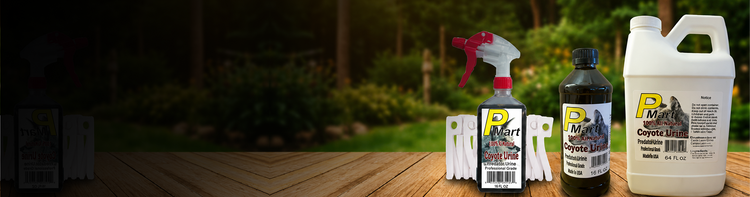
Step-by-Step Instructions: How to Apply Coyote Urine
Step-by-Step Instructions: How to Apply Coyote Urine
Most people buy predator urine, apply it once in a few obvious spots, and then declare that it did not work. The product is not the problem. The application is.
Coyote urine is a genuine, potent biological deterrent, but it only performs when it is placed correctly, at the right height, in the right zones, and refreshed on the right schedule. Once you understand how to apply coyote urine the way wildlife actually experiences it, the difference in results is significant.
Read Your Property for Animal Signs Before You Apply
Spraying randomly without knowing where animals are moving is the single biggest waste of product. Before you open a bottle, spend 10 to 15 minutes walking your property and reading the evidence wildlife has already left behind.
Signs that tell you where to focus:
● Tracks in soft soil, mud, or frost near fence lines, garden edges, and outbuildings.
● Worn paths or flattened grass indicate repeated travel routes.
● Scat near feeding areas, denning sites, or along walls.
● Digging, especially near turf edges, garden beds, or the base of structures.
● Chewed plant material, stripped bark, or disturbed mulch.
Choosing the Right Product Format for Your Situation
Coyote urine comes in liquid form and as granules. Neither is universally better. Each has a specific role depending on what you are trying to accomplish.
Liquid coyote urine absorbs into the ground and vegetation quickly, delivering an immediate and concentrated scent impact. Coyote urine granules release scent gradually as they interact with moisture in the soil and air.
For most properties, a combination works best: liquid for targeted spots with active pressure, and granules for the broader perimeter boundary between reapplications.
How to Apply Coyote Urine Liquid in 5 Steps

Step 1: Identify your application zones
Using the sign you read in the walkthrough, mark the specific spots where animals are actively moving or accessing your property. These are your priority application points.
Step 2: Load your applicator
A trigger spray bottle gives you the most control for liquid application. Apply at ground level around and just beyond the target zone. For a garden bed, this means the soil line just outside the perimeter. For a garbage can area, the ground immediately surrounding it is.
Step 3: Apply to wicks or dispensers for elevated placement
Some wildlife, particularly deer and raccoons, follow scent at nose height rather than ground level. Soak cotton wicks or use dispensers hung at 12 to 24 inches off the ground around your perimeter. Hang these every 10 to 15 feet along the zone you are protecting, or closer together in spots with heavy activity.
Step 4: Record where you applied
This sounds optional, but it matters. When you come back to reapply, you want to treat the same points consistently. Inconsistent coverage creates gaps that wildlife will find and exploit.
Step 5: Reapply on schedule
Liquid urine in open outdoor conditions typically holds its potency for five to seven days under normal conditions. Set a reminder so reapplication does not slip past a week, especially during peak nuisance seasons.
4 Steps to Apply Coyote Urine Granules
Step 1: Define your perimeter line
Decide exactly where your boundary is. For a garden, this is the outer edge of the bed. For a yard, it might be the fence line or the edge of a treeline. The perimeter should be a continuous line with no significant gaps when planning how to apply coyote urine effectively.
Step 2: Apply the granules in a consistent line
Use a shaker jug for controlled distribution. Lay a band of granules roughly 4 to 6 inches wide along the perimeter line. Avoid applying so thinly that the scent signal is weak, but you do not need heavy piles either. A consistent band is more effective than scattered clusters.
Step 3: Concentrate extra granules at corners and entry gaps
Corners are where animals tend to test a perimeter. Fence gate openings, gaps at the base of gates, and corners of garden structures deserve a more generous application than the straight runs between them.
Step 4: Reapply granules every seven to ten days
Granules hold scent longer than liquid because the release is gradual, but they do need to be refreshed. Build this into your outdoor maintenance routine so coverage stays consistent.
Application Height That Most Instructions Skip
Where you place the scent vertically is just as important as where you place it horizontally. Different animals carry their noses at different heights, and your application needs to intercept them at the level they are actually scenting.
|
Target Animal |
Nose Height |
Recommended Application Height |
|
Raccoon |
6 to 12 inches |
Ground level and low wick placement |
|
Skunk |
4 to 8 inches |
Ground level, near entry points |
|
Whitetail deer |
24 to 36 inches |
Elevated wick or dispenser |
|
Coyote (territory marking) |
Ground |
Ground level along the perimeter |
|
Rabbits |
4 to 6 inches |
Ground level |
Last Thoughts
Knowing how to apply coyote urine correctly is what separates the people who swear by it from the people who say it did not work. The product is not magic. It is a biological communication tool, and like any tool, it works best when you use it with precision and consistency. Read your property, target the right zones, apply at the right height, and stay on schedule.
Check out our full coyote urine product line at the Pmart and start protecting your property the right way.ss
FAQs
1. How much coyote urine do I need to cover a standard residential yard?
A 16-ounce trigger spray bottle covers most spot-treatment applications around a typical residential yard. If you’re learning how to apply coyote urine for full perimeter granule coverage, a 16- to 64-ounce shaker jug gives you enough to lay a consistent line.
2. Should I apply coyote urine on the inside or outside of my garden fence?
Apply on both sides if possible, with emphasis on the outside. You want the scent to intercept animals before they reach the fence, not after they are already at it.
3. Does wind direction affect how well coyote urine works?
Yes. In areas with a consistent prevailing wind, applying it on the upwind side of the zone you are protecting means the scent carries toward approaching animals rather than away from them.
4. If I miss a reapplication and animals return, do I need to start over completely?
No. Reapply promptly and consistently for several consecutive days to rebuild the scent signal. Animals respond to the accumulation of scent over time, so a few days of fresh, consistent application will re-establish the deterrent effect.


