

How Far Can a Skunk Spray and How to Keep Them Away?
How Far Can a Skunk Spray and How to Keep Them Away?
You are walking through your backyard at dusk when you spot the white stripe of a skunk weaving between your flowerbeds. Your first thought is “Exactly how far can a skunk spray before you’re at risk?”
At The Pee Mart, we know that understanding this defensive mechanism is only half the battle. The real key to protecting your yard is prevention, making your property unappealing before a skunk even sets foot on it.
By using biological messaging with predator scents and other eco-friendly deterrents, you can keep these odoriferous visitors at a safe distance.
The Physics Behind How Far Can Skunks Spray
Skunks do not just spray randomly. They have a highly evolved system designed for accuracy. Their anal glands contain specialized nozzles that allow them to aim independently, creating a concentrated stream of musk.
Typically, how far can a skunk spray ranges between 10 and 15 feet. However, a light breeze can carry mist even further, coating surfaces, pets, or garden furniture you thought was safe.
This is why relying only on fences or physical barriers is ineffective. Skunks can spray under decks, through gaps, or around chain-link fencing.
Instead, using predator urine to signal risk can change the skunk’s perception of your yard. When a skunk detects the scent of a coyote or fox, it won’t test the boundaries to see. It will simply move along to a safer territory.
The Metabolic Cost of How Often Can a Skunk Spray
Many homeowners assume skunks can spray endlessly. In reality, producing the thiols responsible for their signature stench is metabolically expensive.
A skunk carries enough musk for approximately five to six successive sprays. After that, it can take up to ten days for the supply to fully replenish.
Knowing how often can a skunk spray helps explain their cautious behavior. They are reluctant to use this defense unless absolutely necessary.
By using a natural deterrent, you don’t force a confrontation. You encourage the skunk to move on before it ever considers spraying. This approach protects your property while keeping the skunk safe and unprovoked.
How Far Can a Skunk Spray in Different Environments
Environmental factors dramatically influence how far can skunks spray. Close-range encounters, like in crawlspaces or narrow decks, result in a wide-angle mist instead of a precise stream.
Wind, humidity, and terrain all affect the drift, sometimes extending the spray beyond the typical 15-foot range.
Understanding these variables is crucial. For example, if skunks share pathways with other pests like rabbits or raccoons, your existing rabbit repellent may already provide partial protection.
Layering predator scents across entry points and along perimeter paths reinforces the "redline" the skunk perceives and reduces the risk of accidental sprays.
Evaluating Methods for Skunk Deterrence

When it comes to skunk management, not all deterrents are created equal. Here’s a comparison of common strategies:
|
Method |
Defensive Reach |
Effectiveness |
Risk Level |
|
Physical Fencing |
0 feet (skunks dig) |
Low |
Moderate (cornering risk) |
|
Motion-Activated Sprinklers |
10–20 feet |
Medium (habituation possible) |
Low |
|
Ammonia/Mothballs |
1–3 feet |
Low (toxic to pets and soil) |
High |
|
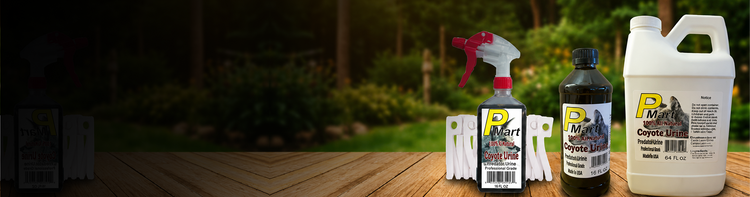
Predator Urine |
Unlimited (scent wall) |
High (instinctual flight) |
Zero (safe and natural) |
Predator urine consistently outperforms mechanical or chemical deterrents because it engages the skunk’s survival instincts rather than attempting to physically block or scare it.
Strategic Placement of Deterrents in High-Risk Zones
Skunks prefer shadows and low-visibility areas. For the best effectiveness, focus your scent applications on fence lines, the base of decks, and along foundation edges. Low placement ensures the skunk encounters the deterrent as soon as it attempts to enter.
Skunks travel the same corridors as raccoons. Using a raccoon repellent alongside skunk deterrents strengthens the “territorial message.” By creating a multi-layered environment of risk, you convince the skunk that the energetic reward of your yard isn’t worth the danger.
This strategy reduces confrontation and reduces the chance of a spray event altogether.
Preventing Spray Incidents Before They Happen
The most effective defense is being prepared. Skunks spray as a last resort, so your goal is to make your yard inhospitable without provoking them:
● Keep compost bins secure and pet food indoors.
● Pick up any fruits or nuts from the ground immediately.
● Maintain predator scent boundaries consistently.
By doing this, you don’t just react to the skunk. You prevent it from testing how far it can spray in the first place.
In Conclusion
Living with skunks doesn’t have to mean worrying about unpleasant sprays. By understanding how often and how far can a skunk spray and strategically using predator scents, you can keep your yard protected and enjoyable.
At The Pee Mart, we provide the tools you need to establish a natural, non-toxic barrier that uses wildlife instincts to protect your property.
Don’t wait for the next encounter! Explore our full range of skunk deterrents and predator urine today to reclaim your yard!
FAQs
1. Does the weather change how far can a skunk spray?
Yes. Wind, humidity, and terrain can extend or reduce the effective range. On windy days, droplets can drift beyond the usual 15-foot stream, making prevention the best strategy.
2. How often can a skunk spray in a single day?
Typically, skunks can spray 5 to 6 times before needing to replenish their supply. After that, they become very cautious and avoid confrontation.
3. How far can skunks spray when startled?
Close-range scares cause a wide-angle spray that can cover more than the standard 15 feet. Tight spaces can even redirect the spray back toward the source.
4. Are young skunks able to spray?
Yes, even kits as young as eight days can spray, though with less volume and aim. By the time they follow their mother for foraging, they can spray 5 to 8 feet and should be treated with caution.


