

Proven Deer Repellent Methods Using Nature’s Redline
Proven Deer Repellent Methods Using Nature’s Redline
You’ve likely experienced the frustration of waking up to a damaged garden, even after trying multiple solutions. The truth is, most quick fixes don’t address the real issue, like how deer think and behave.
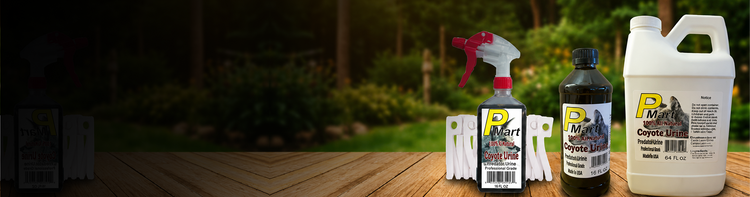
The most reliable deer repellent methods are built around instinct, not temporary discomfort. At The Pee Mart, we focus on what we call Nature’s Redline, a scent-based boundary that signals real danger and keeps deer from stepping into your space in the first place.
How the Redline Rewires Deer Movement Patterns
Deer don’t randomly wander into your yard. They follow familiar paths, returning to the same feeding spots because they feel safe there. Once that sense of safety is broken, their behavior changes quickly.
When you introduce predator scent into their environment, you’re not just adding a smell. You’re changing how they interpret the entire area. Their brain recognizes it as a high-risk zone, and that instinct overrides their hunger.
Over time, this creates a shift. Instead of testing your yard repeatedly, deer begin to avoid it altogether. Your property becomes part of a route they skip, not revisit.
Applying Deer Repellent Methods Across Different Property Layouts
Every property has its own structure, and your approach should match it. A flat suburban yard behaves differently from a sloped or wooded space, especially when it comes to how scent travels.
In a typical residential yard, you’ll want to create a consistent perimeter. Focus on the edges where deer are most likely to enter. These include fence lines, garden borders, and open gaps. On sloped terrain, scent naturally drifts downward, so placing markers at higher points ensures better coverage.
If your home is near wooded areas, deer already have established travel paths. In that case, applying coyote urine along those transition zones helps you intercept them before they reach your lawn. You’re essentially placing a warning sign directly in their path.
A few placement principles to keep in mind:
● Always prioritize entry points over open areas.
● Reinforce corners and edges where deer tend to test boundaries.
● Adjust placement based on how air and terrain influence scent movement.
Using Predator Hierarchy to Increase Perceived Threat Levels
Not all predator scents create the same level of urgency for deer. They instinctively recognize different predators and respond accordingly. This gives you an opportunity to adjust your strategy depending on how serious the problem is.
When deer activity is light, a moderate scent presence may be enough to keep them away. However, during periods of heavy pressure, especially in colder months, you need to increase the perceived threat.
Introducing wolf urine changes the equation. Wolves represent a larger, more dangerous predator, and their scent carries a stronger territorial message. This makes deer far less willing to take risks, even if food is nearby.
Instead of relying on a single approach, you’re creating layers of deer repellent methods that feel real to the animal.
Managing Edge Zones Where Deer Test Your Defenses
Deer rarely enter a yard without hesitation. They approach slowly, often stopping at the edges to assess safety. These boundary areas are where your strategy either works or fails.
Edge zones include places like fence corners, garden borders, and the transition between wooded areas and open space. If the scent barrier is weak here, deer will eventually find a way through.
To strengthen these zones, you need to be more intentional. Increase scent concentration in these areas and avoid placing markers in perfectly straight lines. A more natural, staggered placement mimics how predators mark territory and makes the barrier feel more authentic.
You can improve effectiveness by:
● Doubling up scent markers at high-traffic corners.
● Refreshing these areas more frequently than others.
● Monitoring for new entry points as deer adjust their routes.
Environmental Factors That Quietly Weaken Your Protection

Even well-planned deer repellent methods can lose effectiveness if environmental conditions are ignored. Scent is not static because it changes with weather, temperature, and terrain.
For example, heavy rain can wash away your application, while high heat can cause it to evaporate faster than expected. Wind can scatter scent unevenly, creating weak spots in your barrier.
Here’s a quick reference to help you adjust:
|
Environmental Factor |
Impact on Scent Barrier |
What You Should Do |
|
Heavy Rain |
Washes away scent markers |
Reapply after rainfall |
|
High Heat |
Speeds up evaporation |
Use shaded areas when possible |
|
Wind |
Disperses scent unevenly |
Increase application density |
|
Dense Vegetation |
Traps scent in one area |
Space markers more evenly |
By paying attention to these details, you maintain a consistent Redline, not an unreliable one.
Combining Scent Barriers With Subtle Natural Reinforcements
While predator urine is the foundation of your defense, combining it with other natural elements can strengthen your results without complicating your routine.
Simple adjustments to your landscape can support your strategy. For example, adding dense border plants or textured ground cover can make certain areas less inviting. These are not primary deterrents, but they reinforce the message your scent barrier is already sending.
The key is balance. You don’t need multiple aggressive solutions. Rather, you create a consistent environment where deer feel uncomfortable enough to stay away.
Final Remarks
Protecting your yard doesn’t have to feel like an ongoing battle. When you use deer repellent methods based on nature's redline, you’re working with instinct, not to hinder it. You’re creating a space that deer recognize as unsafe before they even attempt to enter.
At The Pee Mart, we provide pure predator urine designed to help you build that boundary with confidence. You’re not just reacting to damage. You’re preventing it altogether.
Explore our predator urine solutions today and create a natural, long-lasting defense that keeps deer out of your space for good.
FAQs About Deer Repellent Methods
1. How quickly will I see results?
Some deer react immediately, while others may test the area once or twice. With consistent application, avoidance behavior usually develops within a few days.
2. Will the scent bother humans?
Outdoors, the scent fades quickly for humans. Deer, however, continue to detect it much longer due to their heightened sense of smell.
3. Can I use this method year-round?
Yes, and it becomes especially important during colder months when sources of food are limited, and deer are more persistent.
4. Do I need to reapply regularly?
Typically, every 1 to 2 weeks, but weather conditions like rain or heat may require more frequent application.
5. Can deer adapt to predator urine over time?
No. Because it triggers an instinctive survival response, deer do not easily become comfortable with predator scent.


