

Keep Wildlife Out with Garden Animal Deterrents
Keep Wildlife Out with Garden Animal Deterrents
Do you ever decide to take a walk in your garden to enjoy the fresh air? But instead, you find chewed leaves, missing vegetables, or dug holes? Wildlife sees your garden as an easy meal, not the hard work you put into it.
Using the right animal deterrent for gardens can help protect what you grow without harming animals or relying on harsh chemicals.
We believe that understanding animal behavior is important. You can keep wildlife out of your garden safely, naturally, and for the long term by learning how scent and territory influence movement.
Why Urban and Rural Wildlife Respond Differently to Their Environment
Not all animals behave the same way, and where you live makes a huge difference. For example, a raccoon that lives under a city porch has very different habits than one that roams around in the deep woods.
Deep Woods Wildlife
Animals in rural or wooded areas are usually more cautious. Strong predator scents, unfamiliar smells, and new boundaries often send them elsewhere. In these settings, scent deterrents tend to work faster because the animals haven’t been exposed to constant human activity.
City-Dwelling Critters
Urban wildlife is a different story. These animals are already used to people, traffic, and noise. Radios, motion lights, or human scent rarely scare them anymore. For these bold animals, we recommend pairing scent deterrents with physical exclusion, like fencing, raised beds, or blocking access points.
Once you understand this difference, it becomes easier for you to choose the right strategy instead of wondering why a deterrent “didn’t work.”
How to Choose the Right Animal Deterrent for Gardens
Choosing an animal deterrent for your garden isn’t about picking just one product and hoping for the best. Different animals respond to different predator signals, and using the wrong scent can limit results.
Here’s a quick breakdown to help you decide:
● Fox urine repels rabbits, squirrels, groundhogs, and other small garden pests. Many gardeners use it when plants are being nibbled close to the ground.
● Bobcat urine works well for rodents like mice, voles, moles, and skunks.
● Mountain lion scent is effective for raccoons, wild pigs, and javelina.
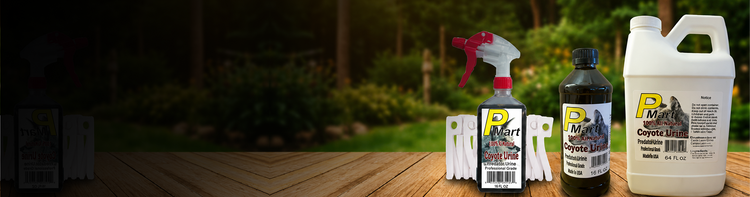
● Coyote urine works well for whitetail deer, skunks, groundhogs, and raccoons, also.
● Wolf urine is better suited for larger species and wide, open spaces where animals roam freely.
We have seen the best results when gardeners rotate scents and reapply after rain to keep animals from getting used to a single smell.
Common Reasons Deterrents Fail for Different Animals
When an animal deterrent for gardens doesn’t work, it’s usually not because it is ineffective. It’s because the strategy doesn’t match the animal. Different wildlife defeat barriers in different ways.
Here are common problems and how you can fix them:
|
Problem You See |
Likely Culprit |
Why It Failed |
What Works Better |
|
Leaves clipped low |
Rabbits |
Fence too short |
Add a lower mesh and scent at ground level. |
|
Plants disappearing overnight |
Groundhogs |
Dug under the barrier |
Bury the mesh 12 inches deep. |
|
Missing fruit |
Squirrels |
Climbed over the barrier |
Add scent and overhead netting. |
|
Trash disturbed nearby |
Raccoons |
Used to noise and light |
Use physical barriers and scent. |
A Smarter Feeding Strategy That Keeps Wildlife Away from Your Plants
Here’s something we don’t see talked about enough. Hungry animals take risks! If food is scarce, they will push past almost any deterrent.
That’s why sacrificial planting can be so effective. You can plant clover, cheap greens, or fast-growing plants far away from your main garden to give wildlife an easier option. When you pair it with scent deterrents around your vegetables, animals often choose the low-effort food source instead of testing your defenses.
This strategy doesn’t replace deterrents, but it supports them by reducing pressure on your garden.
Legal and Ethical Considerations Every Property Owner Should Understand
We understand how tempting it can be to trap and relocate wildlife when damage keeps happening. What many gardeners don’t realize is that this can be illegal or harmful in many areas.
Before taking that step, keep this in mind:
● Many states prohibit relocating wildlife without permits.
● Moving animals often separates mothers from their offspring.
● Spring trapping can leave young animals without care.
We always encourage you to check local regulations and focus on humane, preventative methods first. Natural deterrents and habitat changes protect your garden and also respect wildlife.
FAQs
1. Can an animal deterrent for gardens harm animals or my plants?
No. Our predator urine scents are absolutely non-toxic. You can use them safely to provoke animals’ natural instincts and repel them.
2. Why does my deterrent work for some animals but not others?
That happens because different animals respond to different kinds of threats. You need to match the scent and strategy to the animal to make it effective.
3. Why do raccoons keep coming back to my yard at night?
Raccoons always come out looking for easy food sources like trash, pet food, and fallen produce. They tend to return every night once they find a reliable meal.
4. Which critters will stay away when I use coffee grounds?
There are some small insects that stay away when you use coffee grounds. But they won’t be able to repel larger animals like raccoons, rabbits, or groundhogs.
5. Can I spray cayenne pepper in my garden?
Yes, you can use cayenne pepper, but it’s only effective for a short time because rain washes it quickly, and many animals adapt to it gradually.
Closing Thoughts
There’s no need to keep struggling and using harmful methods to protect your garden from the wildlife. When you choose an animal deterrent for gardens that matches your environment and the animals you are dealing with, you create boundaries that wildlife understands and respects.
At The Pee Mart, we have spent years helping gardeners safeguard their spaces using natural predator scents that work with animal behavior. Explore our urine repellents today and take back your garden the humane way.


